
Crushing and transfer-point parts, matched to the feed and the machine.
Wear components for rock, sand, and gravel operations, specified against the abrasion and impact your crusher actually sees rather than against a catalog page.
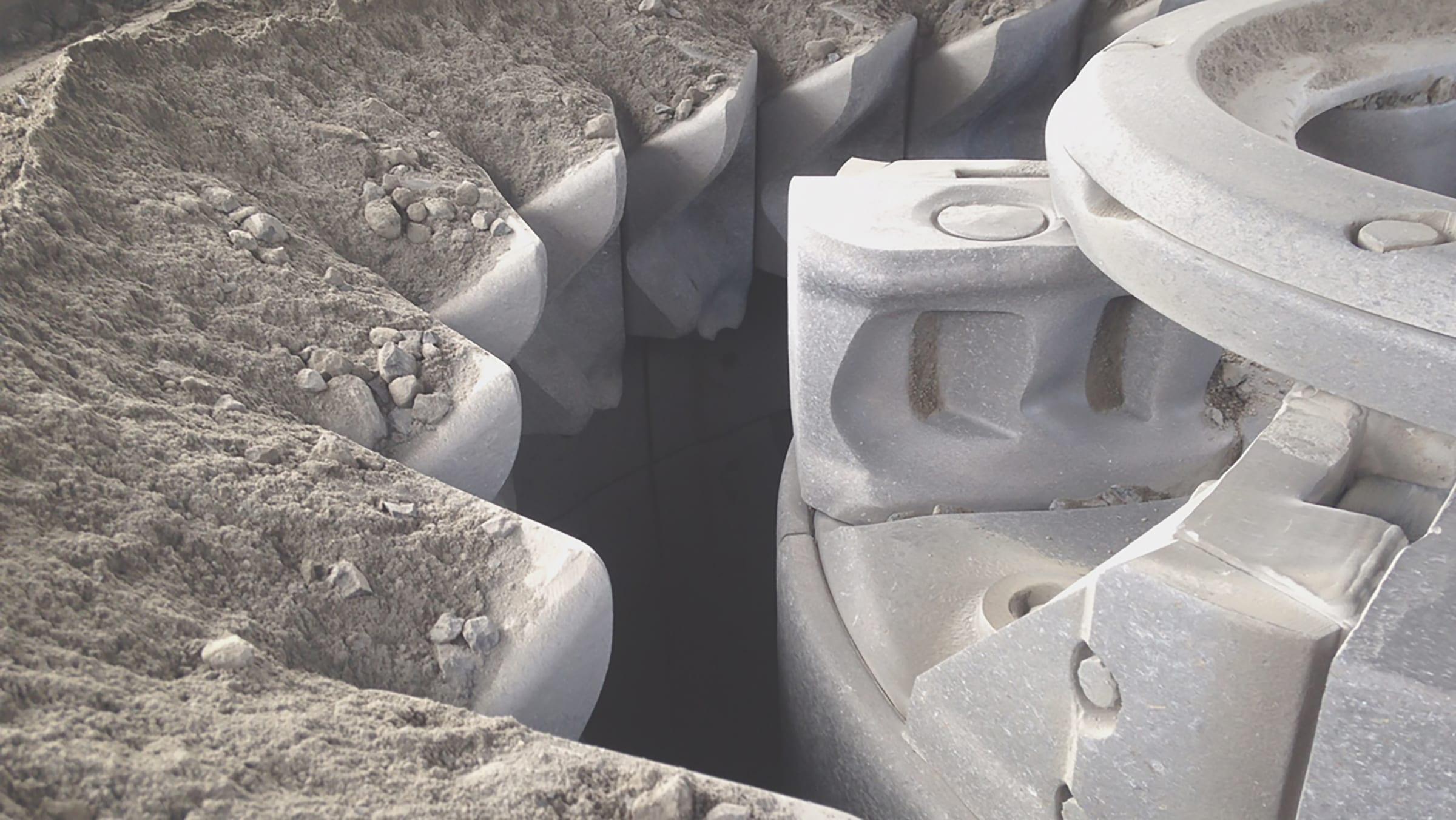
Aggregate wear parts
What we pour here.
The same part number behaves differently in two plants, because the feed is different. Clean river gravel wears a liner by sliding abrasion. Shot rock gouges and hits it. Two different material decisions, and getting it wrong costs you a part that cracks or one that wears out early.
Typical parts
- VSI shoes and anvils
- Blow bars
- Feed disks
- Chute liners
Materials
- High-chrome iron
- Alloy steel
Grades and mechanical properties on the data sheets
What decides the job
Three things worth settling before the quote.
01
Abrasion against impact
Hardness resists abrasion and toughness survives impact, and you cannot maximize both in one alloy. Whether the part sits in primary, secondary, or tertiary decides which way the compromise goes.
02
Change-out time
If replacing a part stops the plant for a shift, how long it runs matters more than what it is made of. Service life and change-out time belong in the quote conversation.
03
Fit and mounting
A wear part that does not seat correctly wears wrong regardless of the metal it is made from, so mounting and fit get checked against the machine it returns to.
How it gets made
Poured, treated, and inspected on one site.
Chemistry is read before tap, heat treatment runs to a written recipe, and UT · MT testing is done here rather than sent out. Everything stays tied to the heat number.
Send the drawing or the specification.
Tell us what the part has to survive and engineering comes back with a material, a process, and a price.
Technical review within 48 hours